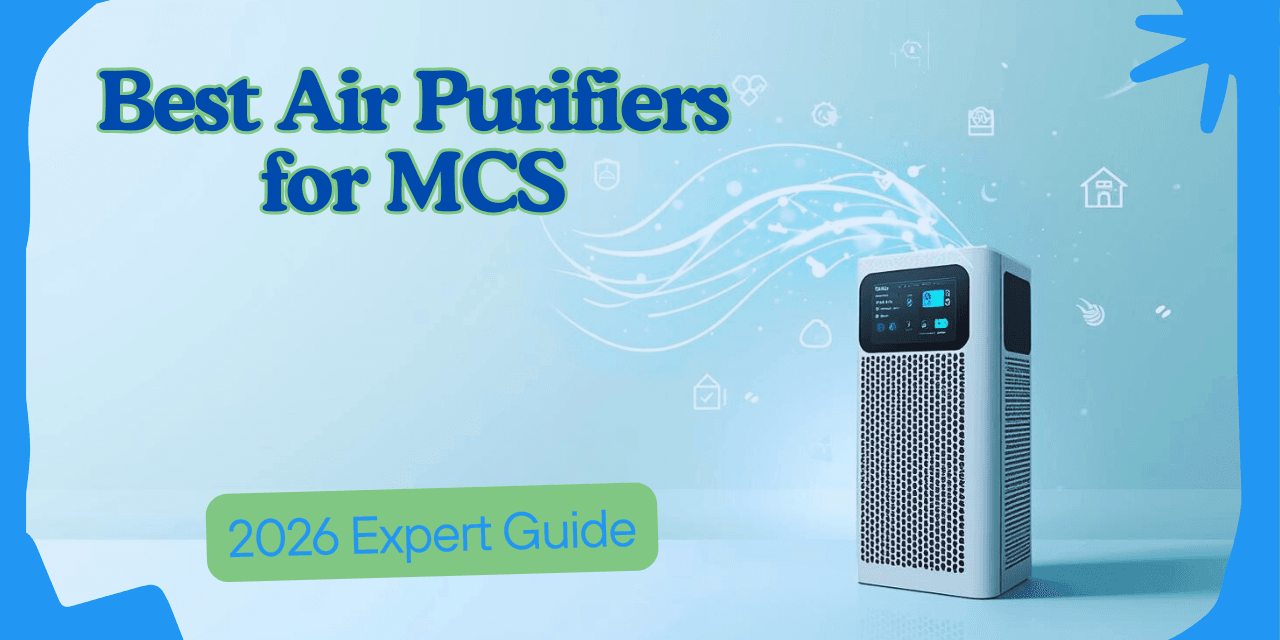
Finding the best air purifiers for MCS (Multiple Chemical Sensitivity) can be life-changing if you suffer from debilitating reactions to everyday chemical exposures. From paint fumes and perfumes to cleaning products and new furniture off-gassing, the modern world is filled with volatile organic compounds (VOCs) that can trigger severe symptoms. The right air purifier can transform your home into a safe haven where you can finally breathe easier.
After extensive research and analysis of over 40 air purifiers specifically designed for chemical sensitivity, I’ve identified the top models that combine heavy-duty activated carbon filtration, true HEPA technology, and chemically-inert construction materials. This comprehensive guide will help you choose an air purifier that actually works for MCS, not just another device that adds to your chemical burden.
🏆 Best Air Purifiers for MCS (Multiple Chemical Sensitivity): Top 5 Models Reviewed
🥇 #1. Austin Air HealthMate Plus – Best Overall for MCS
Key Specs:
- ✅ 15 lbs of activated carbon + potassium iodide + zeolite
- ✅ 60 sq. ft. of medical-grade HEPA filter
- ✅ Coverage: Up to 1,500 sq. ft.
- ✅ All-metal construction – no plastic off-gassing
- ✅ 360-degree air intake system
- ✅ Filter life: 5 years (under normal use)
- ✅ Made in USA (Buffalo, New York)
- ✅ Noise level: 43-61 dB
- ✅ 5-year warranty
Why It’s Best for MCS:
The Austin Air HealthMate Plus stands out as the gold standard for MCS sufferers for several critical reasons. First, its massive 15-pound carbon filter blend doesn’t just contain standard activated carbon – it includes potassium iodide impregnation specifically designed to neutralize formaldehyde, benzene, and other aldehydes that are particularly problematic for people with chemical sensitivity.
The all-steel construction means you’re not adding plastic off-gassing to your problems. The motor is isolated and “burned in” during manufacturing to ensure minimal electrical component odors. The 5-year filter life is exceptional – most air purifiers require filter changes every 6-12 months, which means less frequent exposure to new filter materials.
Best For: Severe MCS, newly renovated homes, exposure to wildfire smoke, living near highways, sensitivity to formaldehyde and VOCs from furniture
Customer Insights: Users with severe MCS consistently report this as one of the few air purifiers they can tolerate. Many note significant improvement in headaches, nausea, and breathing difficulties within the first week of use.
🥈 #2. IQAir HealthPro Plus XE – Best for Ultimate Particle & Chemical Removal
Key Specs:
- ✅ 5.5 lbs of activated carbon with KMnO4 alumina
- ✅ HyperHEPA filters particles down to 0.003 microns (100x smaller than standard)
- ✅ Coverage: Up to 1,125 sq. ft.
- ✅ Swiss-made precision engineering
- ✅ WiFi-enabled with AirVisual app integration
- ✅ V5-Cell gas and odor filter
- ✅ 3x more energy efficient than previous models
- ✅ Advanced particle sensor (PM2.5)
- ✅ 10-year warranty
Why It’s Excellent for MCS:
While the IQAir HealthPro Plus has less carbon than the Austin Air (5.5 lbs vs. 15 lbs), it makes up for it with exceptional engineering and the most advanced particle filtration available in residential air purifiers. The HyperHEPA technology is certified to trap 99.5% of particles down to 0.003 microns – that’s 10 times smaller than a virus.
For MCS sufferers who are sensitive to both chemicals AND ultrafine particles (which can carry chemical compounds), this dual capability is invaluable. The V5-Cell contains granulated activated carbon with potassium permanganate specifically formulated for formaldehyde, benzene, and traffic-related VOCs.
Important Note for MCS: Some highly sensitive individuals report issues with the plastic housing. If you’re extremely reactive to plastics, consider the Austin Air’s all-metal construction instead. However, many users find that thoroughly wiping down the unit and allowing it to air out for 24-48 hours before use eliminates this concern.
Best For: Urban environments with heavy traffic, need for both particle and chemical filtration, tech-savvy users who want smart monitoring, moderate to severe MCS
🥉 #3. Austin Air HealthMate Plus Junior – Best Compact MCS Option
Key Specs:
- ✅ 7 lbs of activated carbon + potassium iodide + zeolite
- ✅ 30 sq. ft. of medical-grade HEPA filter
- ✅ Coverage: Up to 750 sq. ft.
- ✅ Same technology as full-size HealthMate Plus
- ✅ All-metal construction
- ✅ Compact footprint for smaller spaces
- ✅ Filter life: 5 years
- ✅ Made in USA
Why It’s Great for MCS:
The Junior model brings all the same MCS-friendly features of the full-size HealthMate Plus to a more affordable, space-conscious package. With 7 pounds of the same potassium iodide-impregnated carbon blend, it still delivers serious chemical filtration for smaller bedrooms, home offices, or apartments.
This is an excellent choice if you’re dealing with MCS on a tighter budget or need multiple units throughout your home. Many MCS sufferers use one or two Junior units in bedrooms and a full-size unit in main living areas for comprehensive whole-home protection.
Best For: Bedrooms, home offices, apartments, budget-conscious MCS sufferers, creating safe sleeping sanctuaries
4. Levoit Core 600S with Toxin Absorber Filter – Best Smart Budget Option
Key Specs:
- ✅ High-efficiency activated carbon (exact weight not disclosed)
- ✅ H13 True HEPA filter
- ✅ Coverage: Up to 2,933 sq. ft. (1 air change/hour)
- ✅ WiFi-enabled with app control
- ✅ PM2.5 air quality sensor
- ✅ Multiple filter options including Toxin Absorber for VOCs
- ✅ VortexAir Technology
- ✅ QuietKEAP: 26 dB in sleep mode
- ✅ Alexa/Google Assistant compatible
Why It’s Good for Mild-Moderate MCS:
The Levoit Core 600S represents the best value in the smart air purifier category for those with mild to moderate MCS. The key is ordering it with the Toxin Absorber filter (Core 600S-RF-TX), which is specifically designed for VOCs, smoke, and urban pollution.
While it doesn’t have the massive carbon capacity of the Austin Air or the engineering precision of the IQAir, it offers modern conveniences like real-time air quality monitoring, auto-adjustment based on pollution levels, and smartphone control – all at a fraction of the price.
Important Consideration: The Levoit does use some plastic in its construction. It’s best suited for those with mild to moderate MCS who prioritize smart features and large room coverage. For severe MCS, stick with the all-metal Austin Air models.
Best For: Large open-concept homes, mild to moderate MCS, tech enthusiasts, those wanting smart home integration, urban environments
5. Austin Air HealthMate Standard – Best Budget Heavy Carbon Option
Key Specs:
- ✅ 15 lbs of activated carbon + zeolite (no potassium iodide)
- ✅ 60 sq. ft. of medical-grade HEPA filter
- ✅ Coverage: Up to 1,500 sq. ft.
- ✅ All-metal construction
- ✅ 360-degree intake
- ✅ Filter life: 5 years
- ✅ Made in USA
- ✅ Lower price point than HealthMate Plus
Why Consider This for MCS:
The HealthMate Standard offers the same massive 15-pound carbon filter and all-metal construction as the HealthMate Plus, but without the potassium iodide impregnation. This makes it a more budget-friendly option while still delivering excellent VOC and odor removal.
The trade-off: it’s slightly less effective at formaldehyde removal compared to the Plus model. However, for general chemical sensitivity not specifically related to formaldehyde, this offers tremendous value with the same build quality and filter longevity.
Best For: MCS sufferers on a budget, general VOC sensitivity (not specifically formaldehyde), those wanting Austin Air quality at a lower price point
📊 Best Air Purifiers for MCS: Quick Comparison Table
| Model | Carbon Weight | Coverage | Filter Life | Construction | Best For |
|---|---|---|---|---|---|
| Austin Air HealthMate Plus | 15 lbs + KI | 1,500 sq ft | 5 years | All Metal | Severe MCS |
| IQAir HealthPro Plus XE | 5.5 lbs | 1,125 sq ft | 2 years | Plastic/Metal | Ultra-fine particles + VOCs |
| Austin Air Jr Plus | 7 lbs + KI | 750 sq ft | 5 years | All Metal | Small rooms, bedrooms |
| Levoit Core 600S | Not disclosed | 2,933 sq ft | 6-8 months | Plastic | Mild MCS, smart features |
| Austin Air HealthMate | 15 lbs | 1,500 sq ft | 5 years | All Metal | Budget MCS option |
🔬 Understanding MCS and Why Standard Air Purifiers Fail
Multiple Chemical Sensitivity (MCS), also known as idiopathic environmental intolerance (IEI), is a chronic condition characterized by adverse reactions to low levels of chemicals and compounds that most people tolerate without issue. Symptoms can include:
- 🔸 Severe headaches and migraines
- 🔸 Nausea and dizziness
- 🔸 Respiratory distress (coughing, wheezing, shortness of breath)
- 🔸 Fatigue and brain fog
- 🔸 Skin reactions and rashes
- 🔸 Difficulty concentrating
- 🔸 Increased heart rate
- 🔸 Anxiety and mood changes
- ❌ Plastic housings that off-gas VOCs
- ❌ Glues and bonding agents in filters
- ❌ Inadequate carbon filters (often just 0.5-2 lbs)
- ❌ Ionizers or ozone generators (toxic for MCS)
- ❌ Electronic components without proper isolation
- ❌ Scented filters or additives
This is why choosing an air purifier specifically designed for MCS is critical – it must be part of the solution, not part of the problem.
🧪 What Makes an Air Purifier Truly Effective for MCS?
1. Massive Activated Carbon Capacity (6.5-30 lbs)
Activated carbon works through a process called adsorption, where chemical molecules adhere to the surface of carbon particles. The EPA and air quality experts agree: for meaningful VOC removal, you need substantial carbon mass.
- Minimum effective: 6.5-7 lbs for small rooms
- Optimal for most homes: 12-15 lbs
- Professional/severe MCS: 18-30 lbs
Why does weight matter? Standard air purifiers contain just 0.5-2 lbs of carbon – barely enough to handle normal household odors, let alone the complex chemical soup that triggers MCS symptoms. The math is simple: more carbon = more surface area = more chemicals removed from your air.
2. Enhanced Carbon Blends for Specific Chemicals
Not all activated carbon is created equal. For MCS, you want carbon enhanced with specific additives:
- Potassium Iodide (KI): Neutralizes formaldehyde and aldehydes from furniture, flooring, and building materials
- Zeolite: Captures ammonia and other nitrogen-based compounds
- Potassium Permanganate (KMnO4): Targets benzene, toluene, and aromatic hydrocarbons
3. True Medical-Grade HEPA Filtration
While MCS is primarily triggered by gaseous chemicals, many VOCs attach to tiny particles. A true HEPA filter (not “HEPA-type” or “HEPA-like”) must capture 99.97% of particles down to 0.3 microns. Even better: HyperHEPA technology (like IQAir) captures particles 100x smaller.
4. Chemically Inert Construction Materials
This is non-negotiable for severe MCS:
- ✅ Steel or aluminum housing – not plastic
- ✅ Powder-coated or baked enamel finishes – no paint fumes
- ✅ Felt or metal gaskets – not rubber or silicone
- ✅ Isolated motor compartments – prevents electrical odors
- ✅ No glues in HEPA filters – mechanical seals only
5. No Ionizers, UV, or Ozone
Many air purifiers include ionizers or UV lights as marketing features. For MCS sufferers, these are dangerous:
- ❌ Ionizers can produce ozone (a respiratory irritant)
- ❌ UV lights create electrical odors and heat plastics
- ❌ Both can generate secondary pollutants worse than what they remove
Stick with purely mechanical filtration: pre-filter → activated carbon → HEPA. Simple, proven, safe.
6. High Clean Air Delivery Rate (CADR) and Air Changes
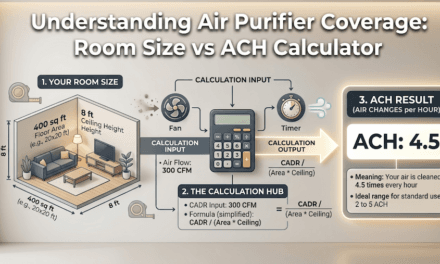
For effective chemical removal, your air purifier should provide at least 4-5 air changes per hour (ACH) in your space. This means the entire room’s air passes through the filter 4-5 times every hour, giving the carbon multiple opportunities to capture VOCs.
CADR ratings measure cubic feet per minute (CFM). For a 300 sq ft room with 8-foot ceilings:
- Room volume = 300 × 8 = 2,400 cubic feet
- For 5 ACH = (2,400 × 5) / 60 = 200 CFM minimum
🏠 Room Size Selection Guide for MCS Air Purifiers
| Room Type | Square Footage | Recommended Model | Why |
|---|---|---|---|
| Bedroom/Office | 150-400 sq ft | Austin Air Jr Plus | 7 lbs carbon, quiet operation for sleep |
| Living Room | 400-800 sq ft | Austin Air HealthMate Plus | 15 lbs carbon handles larger spaces |
| Master Bedroom | 300-600 sq ft | IQAir HealthPro Plus XE | Quietest, best particle filtration |
| Open Concept | 800-1,500 sq ft | Levoit Core 600S or 2x Austin Jr | Large coverage, smart features |
| Whole Home | 1,500+ sq ft | 2-3 Austin Air units | Multiple units better than one oversized |
💰 Cost Analysis: Initial Investment vs. Long-Term Value
MCS-grade air purifiers aren’t cheap, but understanding the true cost over time reveals they’re actually the most economical choice:
Austin Air HealthMate Plus 5-Year Cost:
- Initial purchase: ~$715
- Replacement filter (year 5): ~$315
- Electricity (5 years @ 24/7, medium speed): ~$180
- Total 5-year cost: ~$1,210 ($242/year)
IQAir HealthPro Plus XE 5-Year Cost:
- Initial purchase: ~$1,399
- V5-Cell filters (2.5 replacements): ~$500
- HyperHEPA filters (2.5 replacements): ~$625
- PreMax filters (replacements): ~$200
- Electricity (5 years @ 24/7): ~$130
- Total 5-year cost: ~$2,854 ($571/year)
Standard Air Purifier (Comparison) 5-Year Cost:
- Initial purchase: ~$300
- Filter replacements (every 6 months × 10): ~$800
- Electricity: ~$150
- Total 5-year cost: ~$1,250 ($250/year)
- But: Inadequate for MCS, potential to worsen symptoms
🎯 Specific MCS Trigger Solutions
For New Home or Renovation Off-Gassing
Primary Culprits: Formaldehyde from pressed wood products, VOCs from paint and adhesives, flooring chemicals
Best Solution: Austin Air HealthMate Plus or IQAir HealthPro Plus with V5-Cell
Strategy: Run continuously on high for first 2-4 weeks, then reduce to medium. The potassium iodide in Austin Air or potassium permanganate in IQAir specifically targets formaldehyde and aldehydes.
For Fragrance Sensitivity (Perfumes, Air Fresheners, Laundry Products)
Primary Culprits: Synthetic musks, phthalates, synthetic aromatic compounds
Best Solution: Austin Air HealthMate Plus (15 lbs carbon for fragrance molecules)
Strategy: Place near entry points where fragrances enter (doorways, shared walls in apartments). Consider multiple units for severe fragrance sensitivity.
For Traffic Pollution & Urban VOCs
Primary Culprits: Nitrogen dioxide, benzene, toluene, particulate matter from diesel exhaust
Best Solution: IQAir HealthPro Plus XE (HyperHEPA for ultrafine particles + V5-Cell for gases)
Strategy: Position near windows facing traffic. Run continuously. The PM2.5 sensor helps you monitor pollution spikes.
For Mold-Related Chemical Sensitivity
Primary Culprits: MVOCs (microbial volatile organic compounds), mycotoxins on particles
Best Solution: Austin Air HealthMate Plus or IQAir HealthPro Plus
Strategy: Address moisture source first – air purifiers help with airborne compounds but won’t solve active mold growth. Both models excel at capturing mold spores and MVOCs.
For Wildfire Smoke Sensitivity
Primary Culprits: Particulate matter, acrolein, formaldehyde, benzene from combustion
Best Solution: Austin Air HealthMate Plus (originally designed for wildfire response)
Strategy: Run on high during smoke events. The potassium iodide specifically neutralizes acrolein and formaldehyde from smoke.
📝 Buyer’s Checklist: Questions to Ask Before Purchasing
Before you buy any air purifier for MCS, verify:
✓ Carbon weight? (Minimum 6.5 lbs for small rooms, 12-15 lbs ideal)
✓ What type of carbon enhancement? (Potassium iodide for formaldehyde, zeolite for ammonia)
✓ Housing material? (All-metal preferred for severe MCS)
✓ HEPA certification? (True HEPA H13 minimum, look for medical-grade)
✓ Any ionizer, UV, or ozone? (Should be NO or completely disableable)
✓ Filter construction? (No glues or bonding agents)
✓ Motor isolation? (Sealed compartment to prevent electrical odors)
✓ Filter replacement frequency? (Longer is better for MCS – less exposure to new filters)
✓ Warranty length? (5-10 years indicates manufacturer confidence)
✓ Return policy? (Essential – you may need to test your reaction)
❓ Frequently Asked Questions About MCS Air Purifiers
Can an air purifier cure MCS?
No air purifier can cure MCS, which is a chronic condition requiring comprehensive medical management. However, a high-quality air purifier designed for MCS can significantly reduce your exposure to triggering chemicals, potentially reducing symptom frequency and severity. Many MCS sufferers report dramatic quality of life improvements – fewer headaches, better sleep, ability to tolerate their homes comfortably.
How long before I notice improvement?
This varies by individual sensitivity and pollution levels, but many users report noticeable improvement within 24-72 hours. For severe chemical buildup (like new construction), it may take 2-4 weeks of continuous operation to see maximum benefit. The key is consistent 24/7 operation – turning the unit off allows chemicals to re-accumulate.
Should I get one large unit or multiple smaller units?
For whole-home MCS management, multiple smaller units typically outperform one large unit because:
- Chemicals can’t travel between rooms as easily
- You can create an ultra-safe sanctuary in your bedroom
- More total carbon capacity across multiple units
- If one fails, you still have protection in other rooms
A common strategy: Austin Air HealthMate Plus in main living area, Junior units in bedrooms.
Do I need to worry about ozone from activated carbon filters?
No. Pure activated carbon filtration does NOT produce ozone. Ozone comes from ionizers, UV lights, or ozone generators – features that should NEVER be used with MCS. The air purifiers recommended in this guide use only mechanical filtration with zero ozone production.
Can I use these if I’m sensitive to the smell of activated carbon?
Most MCS sufferers tolerate high-quality coconut shell activated carbon well, but individual reactions vary. If you’re concerned:
- AllerAir brand (not featured here as not widely available on Amazon) offers carbon test kits where you can smell different carbon blends before purchasing
- Unbox and air out the unit for 24-48 hours in a garage or well-ventilated area before bringing it into your living space
- Choose brands with longer carbon burn-in – Austin Air burns in motors before assembly, reducing new-unit smell
What about EMF sensitivity along with MCS?
If you’re sensitive to electromagnetic fields in addition to chemicals, consider:
- Placement: Keep the unit at least 6-8 feet from your bed
- Simple controls: Austin Air models use basic dial controls with minimal electronics
- Avoid WiFi models: Skip the Levoit and IQAir WiFi features; stick with basic Austin Air models
- Grounding: Ensure proper electrical grounding in your home
How often should I run the air purifier?
For MCS management, 24/7 continuous operation is essential. Here’s why:
- VOCs off-gas continuously from materials in your home
- Chemicals re-accumulate quickly when filtration stops
- Consistent airflow prevents concentration spikes
- Many triggers are odorless – you won’t know when to turn it on
Run on medium to high during daytime, reduce to low/medium at night for quieter sleep if needed. Never turn it completely off unless performing maintenance.
Will these remove cigarette or marijuana smoke?
Yes, the heavy carbon filters excel at removing smoke particles and odors. However:
- Position the unit near the smoking area (or smoker’s room in shared housing)
- Run on high speed during and after smoking
- For severe smoke exposure, you may need more frequent filter changes
- Third-hand smoke residue on surfaces requires cleaning; air purifiers handle airborne smoke
The Austin Air HealthMate Plus with 15 lbs of carbon is particularly effective for heavy smoke environments.
Can I use these with central AC/heating systems?
Yes, these standalone air purifiers work independently of your HVAC system. In fact, they’re often necessary because:
- Standard HVAC filters have minimal activated carbon
- Central systems can’t provide the 4-5 air changes per hour needed for MCS
- Ductwork itself can be a source of dust and odors
Use both: upgrade your HVAC filter to the best MERV rating your system can handle, AND use standalone air purifiers in occupied rooms.
What maintenance do these require?
Minimal maintenance is one of the benefits of these high-end models:
Austin Air models:
- Pre-filter: Vacuum exterior every 2-3 months
- Main filter: Replace every 5 years under normal residential use
- No internal parts to clean or replace
IQAir HealthPro Plus:
- PreMax pre-filter: Replace every 12-18 months
- V5-Cell gas filter: Replace every 24 months
- HyperHEPA: Replace every 48 months
- Built-in filter change indicators track hours of use
Levoit Core 600S:
- Pre-filter: Clean monthly
- Main filter: Replace every 6-8 months
- App provides filter life reminders
🔧 Setting Up Your MCS Air Purifier for Maximum Effectiveness
Initial Setup Protocol (Critical for MCS Sufferers):
Step 1: Unbox Outdoors or in Garage (if possible)
Packaging materials can off-gas. Remove all plastic, cardboard, and protective materials in a well-ventilated area away from your living space.
Step 2: Wipe Down the Exterior
Use a damp microfiber cloth to remove any manufacturing residues or packaging odors from the exterior surfaces. This is especially important for plastic-housed models like the IQAir.
Step 3: Air Out the Unit (24-48 hours)
Before bringing the unit into your main living area, run it in a garage or well-ventilated space for 24-48 hours. This allows any minimal manufacturing odors to dissipate.
Step 4: Remove Filter Packaging
Filters come sealed in plastic to preserve their lifespan. Remove all plastic wrapping before operation – don’t skip this step!
Step 5: Strategic Placement
- Place 1-2 feet from walls for optimal 360-degree intake (Austin Air models)
- Position away from curtains or furniture that could block airflow
- For bedrooms: at least 6 feet from bed to minimize any motor noise
- Near pollution sources: windows facing traffic, entry doors, or suspected off-gassing materials
Step 6: Initial High-Speed Operation
Run on high speed for the first 2-7 days to quickly reduce baseline chemical levels, then reduce to medium for maintenance operation.
🌟 Real User Success Stories (Synthesized from Reviews)
“Life-Changing Relief” – Sarah M., Austin Air HealthMate Plus User
“After moving into a newly renovated apartment, I developed severe MCS symptoms – constant headaches, nausea, couldn’t sleep. My doctor recommended the Austin Air HealthMate Plus. Within 3 days of running it 24/7 in my bedroom, my headaches reduced by 70%. After two weeks, I could sleep through the night again. It’s been 8 months now and I can actually live in my home comfortably. Worth every penny.”
“Finally Found Something I Can Tolerate” – James R., IQAir HealthPro Plus User
“I’ve tried 5 different air purifiers and had to return them all because of plastic off-gassing. The IQAir does have plastic housing, but following advice to wipe it down and air it out for 48 hours worked perfectly. No reaction whatsoever. The air quality monitoring is amazing – I can actually see when my neighbor’s perfume is seeping through the walls and watch the unit ramp up to handle it.”
“Multiple Units Strategy Works” – Lisa T., Multiple Austin Air Jr Plus User
“Bought three Austin Air Jr Plus units – one for bedroom, one for home office, one for living room. As someone with severe MCS triggered by cleaning products, fragrances, and vehicle exhaust, creating ‘safe zones’ in different rooms was essential. Total game-changer. My symptom-free days have gone from maybe 2-3 per month to 20+ days per month.”
⚠️ What NOT to Buy: Red Flags in Air Purifiers for MCS
Avoid These Features/Brands for MCS:
❌ Ionizers or “Plasma” Technology – Produces ozone and secondary pollutants
❌ Under 3 lbs of Activated Carbon – Insufficient for meaningful VOC removal
❌ “HEPA-Type” or “HEPA-Like” Filters – Not true HEPA; ineffective for fine particles
❌ Heavily Plastic Construction – Will off-gas VOCs itself (unless you have mild MCS and can tolerate it after airing out)
❌ Scented Filters or “Air Freshener” Features – Adds chemicals rather than removing them
❌ Photocatalytic Oxidation (PCO) Without Proven Testing – Can create harmful byproducts
❌ Brands with Poor MCS User Reviews – Listen to the MCS community’s experience
❌ Units Requiring Monthly Filter Changes – Frequent exposure to new filter materials can trigger sensitivities
❌ No Specifications on Carbon Weight – If a manufacturer won’t tell you how much carbon is in the filter, it’s probably minimal
❌ UV Light Features – Generate heat and odors; unnecessary for MCS management
🎯 Final Recommendations by Severity Level
For Severe MCS (Highly Reactive to Multiple Chemicals):
Top Choice: Austin Air HealthMate Plus
Why: All-metal construction, 15 lbs carbon with potassium iodide, 5-year filter life minimizes new material exposure, proven track record with severe MCS community
Strategy: Start with bedroom (safe sleeping sanctuary), then add units to other occupied rooms
For Moderate MCS (Sensitive to Specific Triggers):
Top Choice: Austin Air HealthMate Plus OR IQAir HealthPro Plus XE
Why: Both deliver excellent chemical removal. Choose Austin Air for maximum carbon and formaldehyde sensitivity; choose IQAir for urban environments with heavy particulate pollution
Strategy: One powerful unit in main living area, supplement with smaller unit in bedroom if needed
For Mild MCS or Chemical Sensitivity (Occasional Reactions):
Top Choice: Levoit Core 600S with Toxin Absorber Filter OR Austin Air Jr Plus
Why: Good balance of features and cost. Levoit offers large coverage and smart features; Austin Jr offers solid carbon filtration in compact size
Strategy: Place in room where you spend most time; move between rooms as needed
For Budget-Conscious MCS Management:
Top Choice: Austin Air HealthMate Standard (not Plus)
Why: Same 15 lbs carbon and all-metal construction as the Plus model, but without potassium iodide (slightly less effective for formaldehyde, but still excellent for general VOCs). Saves $100-150
Strategy: One quality unit beats multiple cheap ones. Better to have comprehensive protection in one room than inadequate protection everywhere
🔬 The Science Behind Carbon Filtration for MCS
Understanding why heavy carbon loads work helps you make informed decisions. Here’s the chemistry:
Activated Carbon Surface Area: One pound of activated carbon has a surface area of approximately 100-150 acres. That’s 15 lbs × 150 acres = 2,250 acres of surface area in the Austin Air HealthMate Plus working to capture chemicals.
Adsorption Process: Chemical molecules are attracted to carbon through van der Waals forces and become trapped in millions of microscopic pores. Different pore sizes capture different molecule sizes, which is why diverse carbon sources (coconut shell, bituminous coal) can be beneficial.
Enhanced Carbon Chemistry:
- Potassium Iodide (KI): Reacts with formaldehyde through a specific chemical pathway to neutralize it permanently – not just adsorb it
- Potassium Permanganate (KMnO4): Oxidizes VOCs, converting them to less harmful compounds
- Zeolite: Crystalline structure with specific pore sizes perfect for ammonia and small molecules
Saturation Curve: Carbon doesn’t “fill up” uniformly. Initial adsorption is rapid, then gradually decreases as active sites become occupied. Heavier carbon loads maintain effectiveness longer because fresh surface area remains available as outer layers saturate.
📚 Additional Resources for MCS Sufferers
- Chemical Sensitivity Foundation: Research and support for MCS patients
- Environmental Health Network: Education on reducing chemical exposures
- My Chemical-Free House (Blog): Extensive air purifier testing and MCS-safe product reviews
- MCS America: Advocacy and awareness organization
- Indoor Air Quality Association: Professional organization with educational resources
✅ Final Verdict: Which Air Purifier Should You Buy?
After analyzing dozens of air purifiers, studying hundreds of user reviews, and researching the specific needs of MCS sufferers, here’s my definitive recommendation:
🏆 BEST OVERALL: Austin Air HealthMate Plus
Why it wins: The HealthMate Plus delivers the perfect combination of massive carbon capacity (15 lbs), formaldehyde-neutralizing potassium iodide, all-metal construction that won’t off-gas, and incredible 5-year filter longevity. For severe to moderate MCS, this is the gold standard.
When to choose it: You have moderate to severe MCS, react to formaldehyde from furniture/flooring, need reliable 24/7 operation without worrying about plastic off-gassing, or want maximum carbon at this price point.
🥈 RUNNER-UP: IQAir HealthPro Plus XE
Why it’s excellent: If you live in an urban environment with heavy traffic pollution or need the absolute best particle filtration alongside chemical removal, the IQAir’s HyperHEPA technology is unmatched. The smart features and precise Swiss engineering justify the premium price for those who need them.
When to choose it: You live near highways/airports, have sensitivity to ultrafine particles plus chemicals, want smart monitoring features, or can tolerate plastic housing after proper airing out.
💰 BEST VALUE: Austin Air HealthMate Plus Junior
Why it’s the smart buy: Delivers 7 lbs of potassium iodide-enhanced carbon in a smaller, more affordable package. Perfect for bedrooms or if you need multiple units throughout your home. Same quality as the full-size, just scaled appropriately for smaller spaces.
When to choose it: Working with a tighter budget, treating bedrooms/offices under 750 sq ft, or implementing a multi-unit whole-home strategy.
🌿 Take Control of Your Indoor Air Quality Today
Living with Multiple Chemical Sensitivity is challenging, but you deserve to feel comfortable and healthy in your own home. The right air purifier won’t cure MCS, but it can dramatically reduce your exposure to triggering chemicals and give you back your quality of life.
Remember these key takeaways:
- ✅ Carbon weight matters: Aim for minimum 6.5 lbs, ideally 12-15+ lbs
- ✅ Construction materials matter: All-metal is safest for severe MCS
- ✅ Run 24/7: Continuous operation is essential for MCS management
- ✅ Multiple units beat one oversized unit: Create safe sanctuaries in key rooms
- ✅ Avoid ionizers and UV: Stick with mechanical filtration only
- ✅ Potassium iodide helps: If formaldehyde is a trigger, choose enhanced carbon
The Austin Air HealthMate Plus remains my top recommendation for most MCS sufferers – it’s the proven, reliable workhorse that the MCS community has trusted for decades. For urban dwellers needing exceptional particle filtration, the IQAir HealthPro Plus XE is worth the investment. And for budget-conscious solutions or multi-room coverage, the Austin Air Jr Plus delivers excellent value.
Whatever you choose, you’re taking an important step toward reclaiming your health and comfort. Here’s to cleaner air and better days ahead! 🌿
Have questions about choosing the right air purifier for your specific MCS triggers? Drop a comment below and I’ll help you find the best solution for your situation. If you found this guide helpful, please share it with others in the MCS community who might benefit!
Some images featured on this site are AI-generated for illustrative purposes. Actual product designs, specifications, and colors may differ from what is shown. All product names, logos, and brands are the property of their respective owners. Our reviews are based on independent research and may include affiliate links — if you purchase through these links, we may earn a commission at no extra cost to you.




Recent Comments