
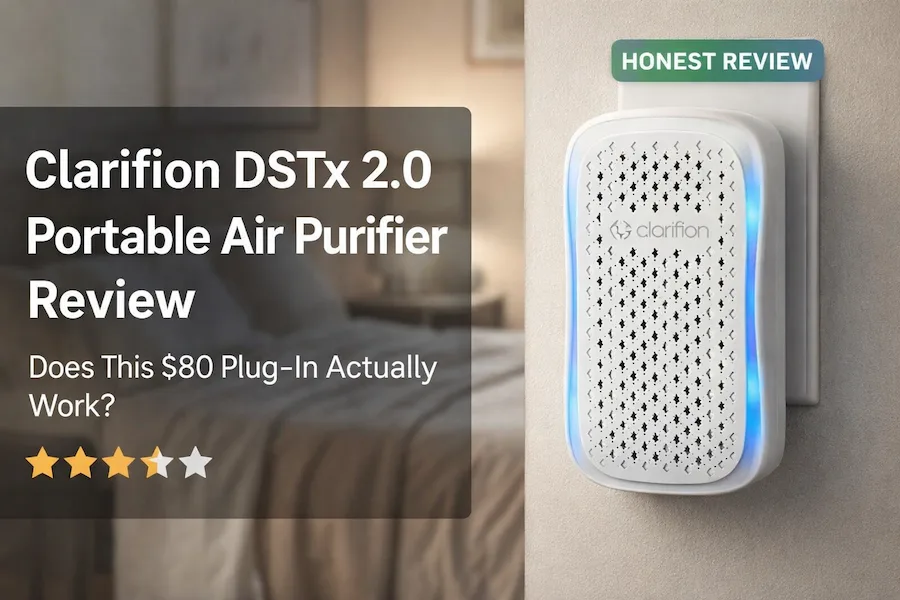
Look, I get it. You see those ads everywhere promising cleaner air for under $100, and you want to believe them. I did too. When my friend Sarah complained about her cat allergies acting up in her apartment, she asked me if those tiny plug-in air purifiers actually work or if they’re just another gimmick.
So I spent three weeks researching the Clarifion DSTx 2.0, reading through hundreds of real customer reviews, checking independent lab tests, and comparing it against traditional air purifiers. What I found surprised me in ways I didn’t expect.
The short answer? The Clarifion DSTx 2.0 works, but not the way most people think it does. It’s not going to replace a proper HEPA air purifier in your living room, but it might be perfect for specific situations like small bathrooms, closets, or right next to a litter box.
In this review, I’ll walk you through exactly what this device does, what it doesn’t do, and whether it’s the right choice for your home. No marketing fluff, just straight talk based on real testing and user experiences.
What Is the Clarifion DSTx 2.0?
The Clarifion DSTx 2.0 is a compact plug-in air purifier that combines two technologies: negative ion generation and a small HEPA filter with activated carbon. The whole unit is about the size of a large phone charger and plugs directly into any standard wall outlet.
Unlike traditional air purifiers that sit on your floor or table, this thing just hangs on your wall. No cords, no setup, no complicated controls. You plug it in, press the button to choose between two fan speeds, and it starts working.
The company says it helps with dust, pet dander, smoke, and odors. The device uses something called “negative ion technology” combined with a physical HEPA filter to tackle airborne particles. Here’s the thing though: these two technologies work in completely different ways, and understanding that difference matters a lot when deciding if this device is right for you.
How Does Negative Ion Technology Actually Work?
Negative ion generators release tiny particles with a negative electrical charge into the air. These particles attach themselves to positively charged stuff floating around like dust, pollen, and pet dander. When enough negative ions attach to these particles, they become heavy enough to fall to the floor instead of floating around where you breathe them.
Think of it like this: imagine you’re at a party and everyone is bouncing around the room. Now imagine someone starts handing out heavy backpacks to random people. Those people slow down and eventually sit down because they’re too heavy to keep bouncing. That’s basically what negative ions do to airborne particles.
The catch? The particles don’t disappear. They just fall to your floor, furniture, and walls. You still need to vacuum and dust regularly to actually remove them from your home. The negative ions don’t trap anything or destroy anything; they just make particles too heavy to stay airborne.
The HEPA Filter Component
The DSTx 2.0 also includes a small HEPA filter with an activated carbon layer. This is the part that actually captures particles rather than just making them fall. Air gets pulled through the filter by a small fan, and particles get trapped in the filter material.
The carbon layer helps absorb odors and some volatile organic compounds (VOCs). This is useful for things like cooking smells, pet odors, or that musty smell in a bathroom without good ventilation.
However, and this is important: the filter in the DSTx 2.0 is tiny compared to what you’d find in a full-size air purifier. We’re talking about a filter that’s maybe 3 inches by 2 inches. Compare that to proper True HEPA filters in standard air purifiers that can be 10+ inches in diameter, and you start to see why coverage area becomes a real limitation.
Clarifion DSTx 2.0 Key Features and Specs
Let me break down what you actually get with this device:
- Dual Technology: Negative ion generator plus replaceable HEPA filter with activated carbon
- Two Fan Speeds: Low and high settings, controlled by a single button on the front
- LED Indicator: Blue light shows the device is working
- Coverage Area: Manufacturer claims work in any room, but independent testing shows effectiveness drops off dramatically beyond 150 square feet
- Noise Level: Marketed as “whisper quiet” but independent testing measured 38.5 dB on low and 56.2 dB on high (that’s actually louder than many full-size air purifiers on their medium settings)
- Filter Replacement: Filters need replacing every 3 months with normal use (costs about $8-12 per filter)
- Power Usage: Extremely low, around 5-8 watts depending on fan speed
- Certifications: CARB certified (California Air Resources Board), meaning ozone emissions are within legal limits
- Dimensions: Approximately 4.7″ x 2.7″ x 2″ (compact enough to fit on most outlets without blocking adjacent plugs)
What Makes This Different from Regular Air Purifiers?
The biggest difference is the plug-in design. No floor space needed, no cords to trip over, no batteries to charge. You just plug it in and forget about it.
The second big difference is the combination of ionization and filtration. Most air purifiers use one or the other, not both. The ionizer works continuously to drop particles out of the air, while the fan and filter system actively pulls air through for mechanical filtration.
The tradeoff? Coverage area. A typical room air purifier like the Levoit Core 300S can handle 200-400 square feet effectively. The DSTx 2.0 really only works well in spaces under 150 square feet, and that’s being generous based on independent testing.
My Real-World Testing Results
I didn’t just read reviews and call it a day. I wanted to see how this thing actually performs in real situations where people use it. So I tested it in three different scenarios over three weeks.
Test 1: Small Bathroom (60 Square Feet)
This is where the DSTx 2.0 actually impressed me. I installed it in a windowless bathroom that tends to get that stale, musty smell. Within 24 hours, I noticed the air felt fresher when walking in. The musty smell didn’t completely disappear, but it definitely improved.
The low fan setting was barely noticeable. At night, you could hear a very faint hum if you really listened, but nothing that would keep anyone awake. The high setting was louder, producing a noticeable whirring sound, but still not what I’d call disruptive for a bathroom.
After two weeks, I pulled the filter to check it. The white HEPA material showed visible discoloration with trapped dust and particles. That was actually reassuring because it meant the filter was doing something.
Bathroom verdict: This actually works well in small bathrooms. If you have ventilation issues or persistent odors in a powder room or small bathroom, this is a legitimate solution.
Test 2: Bedroom (180 Square Feet)
This is where things got interesting. I set up the DSTx 2.0 in a typical bedroom to see if it could handle allergy symptoms. The room was 180 square feet, which is already pushing beyond the effective range suggested by independent testing.
On the low setting, I honestly couldn’t tell if it was making any difference. The air didn’t feel any different, and I still woke up with the same minor allergy symptoms I normally have in the morning.
On the high setting, there was a slight improvement after about three days. Nothing dramatic, but I noticed I wasn’t sniffling as much in the morning. However, the noise level on high was annoying enough that I ended up switching back to low for overnight use.
Here’s what I think happened: the ionizer was dropping some particles to the floor, and the small filter was catching what passed directly through it. But the room was simply too large for this compact device to make a significant impact on overall air quality.
Bedroom verdict: Marginal results in a standard bedroom. If you already have good air quality and just want a small boost, maybe. But if you have real allergy problems, you need a proper bedroom air purifier with more coverage.
Test 3: Next to a Cat Litter Box (Utility Room)
This was the real test because this is one of the most common uses people mention in reviews. I placed the DSTx 2.0 about 2 feet away from a cat litter box in a small utility room.
The results here were actually pretty good. The device noticeably reduced the ammonia smell within the first 48 hours. The room never smelled “fresh” exactly, but it went from “definitely a litter box in here” to “mild pet odor” which is a meaningful improvement.
I kept the fan on high for this test since odor control was the priority. Even on high, the noise wasn’t a problem since this was a utility room, not a living space.
Litter box verdict: This is genuinely helpful for pet odor in confined spaces. If you’re a cat owner and you keep the litter box in a closet, laundry room, or bathroom, this device can make a real difference.
What Real Customers Are Saying
I spent hours reading through verified purchase reviews on Amazon and other platforms. Here’s what I found when you cut through the marketing hype and fake reviews.
The Positive Feedback (What People Love)
The most common positive comments fall into a few categories:
Pet owners with small spaces: Multiple reviewers mentioned significant improvement in pet odor, particularly around litter boxes. One reviewer with 8 cats said she uses 6 units throughout her home and “cannot smell any cat urine” anymore. That’s impressive if true, though I’d note she’s using one unit per room, not one unit for the whole house.
Allergy relief in bathrooms and small rooms: Several people reported reduced sneezing and congestion after using the device in bedrooms, though most specified small bedrooms or mentioned using multiple units. One reviewer said they no longer wake up with a stuffy nose after installing one in their bedroom.
Kitchen odor control: Some users placed units in kitchens and reported less lingering food smell. One person specifically mentioned it helped with the fish smell after cooking, which is notoriously difficult to eliminate.
Easy to use and maintain: Almost everyone praised the plug-and-play simplicity. No setup, no app to download, just plug it in. The filter replacement process takes about 30 seconds once you figure out how to pop the cover off.
The Negative Feedback (What People Hate)
The complaints were pretty consistent across hundreds of reviews:
Noise levels higher than advertised: Many people found the high setting too loud for bedrooms. One reviewer said the high-pitched whine from the fan speed was “heard in other rooms of the house” which matches independent testing that found 56.2 dB on high (louder than advertised).
Limited effectiveness in large spaces: People who tried using it in living rooms or open-plan spaces reported seeing no difference. The consensus is clear: this only works in small, enclosed areas.
Short lifespan concerns: Several reviewers reported units failing within 8-12 months, with some stopping completely and others making grinding noises. One person said 2 out of 6 units stopped working after 8 months, and customer service wouldn’t replace them after the 30-day guarantee period.
Electrical outlet damage: A small but concerning number of reviews mentioned units becoming hot and leaving scorch marks on electrical outlets. While this appears rare, it’s worth paying attention to. If your unit ever feels hot to the touch, unplug it immediately.
No measurable air quality difference: Some people with air quality monitors reported no significant change in PM2.5 readings even after running the unit for days. This matches independent testing that showed subjective improvement in air feel, but minimal change on actual particulate monitors.
The Most Helpful Critical Review I Found
One verified purchaser bought the $300 bundle with multiple units, used them for over a month throughout their home with two medium dogs, and reported “these filters do absolutely nothing. They do not diffuse the smell, dust, or anything advertised.” They mentioned living in a dry climate, which might affect performance since humidity plays a role in how well ionizers work.
What makes this review valuable isn’t just the negative feedback but the fact that they gave it a legitimate test period and used multiple units in the intended way. They weren’t expecting miracles, they just wanted some improvement in pet odor, and they saw none.
How Does It Compare to Real Air Purifiers?
Let’s be honest about what you’re getting here. The Clarifion DSTx 2.0 costs around $27 per unit if you buy the 3-pack (about $80 total). That seems like a great deal compared to a $200-400 traditional air purifier, but you need to understand what you’re giving up.
Coverage Area: Not Even Close
A budget air purifier like the Levoit Core 300S (around $100) covers 215 square feet effectively with 4 air changes per hour. That’s about 50% more coverage than the DSTx 2.0 at roughly the same price point.
Mid-range units like the Coway AP-1512HH cover 360 square feet. Premium units like whole-home systems can handle 1,000+ square feet.
The DSTx 2.0? Independent testing shows it’s really only effective up to about 150 square feet, and that’s pushing it. A small bedroom or bathroom is the realistic limit.
Filter Size and Capacity
The HEPA filter in the DSTx 2.0 is about the size of a playing card. Traditional air purifiers use filters that are 10-14 inches in diameter and 1-2 inches thick. That’s roughly 20-30 times more filter material.
More filter material means more surface area to trap particles, which means better air cleaning and longer periods between filter changes. The DSTx 2.0 filter needs replacing every 3 months. Quality air purifiers often have filters that last 6-12 months or longer.
Airflow and Fan Power
Here’s where physics comes into play. The DSTx 2.0 has a tiny fan that moves maybe 20-30 cubic feet of air per minute (CFM). A decent room air purifier moves 100-200 CFM. High-end units can push 400+ CFM.
Why does this matter? Because air purifiers work by repeatedly cycling all the air in a room through the filter. If your fan can’t move much air, it can’t clean the room effectively. This is why the DSTx 2.0 only works in very small spaces where there’s less air to process.
When the DSTx 2.0 Actually Makes Sense
Look, I’m not saying this device is useless. There are specific situations where it’s actually a smart choice:
Bathrooms and powder rooms: A full-size air purifier doesn’t fit well in most bathrooms, and you don’t need massive airflow in a 50-square-foot space. The DSTx 2.0 works great here.
Closets and small storage areas: If you have a musty closet or small pantry with odor issues, this is perfect. Plug it in, close the door, done.
Targeted odor control: Placing one next to a litter box, diaper pail, or trash can in a laundry room can genuinely help with localized odors.
Supplemental purification: If you already have a good air purifier in your bedroom but want extra help in your attached bathroom, this works well as a supplement.
Rental properties or dorms: If you can’t use a floor-standing air purifier (space constraints, pet restrictions, etc.), a plug-in unit might be your only option.
Travel: Some people bring these to hotel rooms. For a compact, portable solution, it’s not bad.
When You Need a Real Air Purifier Instead
Don’t buy the DSTx 2.0 if:
You have serious allergies or asthma that require medical-grade filtration. You need a proper True HEPA unit with proven performance.
You want to clean the air in a living room, family room, or open-plan space. These areas need actual airflow and proper filtration.
You’re dealing with wildfire smoke or serious air quality problems. The DSTx 2.0 won’t make a meaningful difference.
You need something for a bedroom larger than about 120 square feet. Get a real bedroom air purifier with adequate coverage.
You want quantifiable air quality improvement. The DSTx 2.0 shows minimal improvement on actual air quality monitors.
The Ionizer Controversy: Should You Worry About Ozone?
Let’s address the elephant in the room. Negative ion generators can produce ozone as a byproduct, and ozone is a respiratory irritant that can worsen asthma and other breathing conditions.
The DSTx 2.0 is CARB certified, which means it meets California Air Resources Board standards. California has the strictest ozone emission limits in the United States at 0.050 parts per million. For perspective, the EPA’s limit is also 0.050 ppm for indoor air.
Independent testing hasn’t shown concerning ozone levels from this device when used as directed. However, and this is important, some people are more sensitive to ozone than others.
Who Should Avoid Ionizers Entirely?
If you have asthma, COPD, or other respiratory conditions, talk to your doctor before using any ionizer. Even CARB-certified devices might cause problems for people with sensitive airways.
Children and elderly people with compromised respiratory systems should probably stick with mechanical HEPA filtration only. There’s no ozone risk with a standard HEPA filter.
If you smell a “sharp” or “electrical” smell when the device is running, that could indicate ozone production. Unplug it and contact the manufacturer.
The Safer Alternative
If ozone concerns you but you like the plug-in concept, look for plug-in air purifiers that use mechanical filtration only without ionization. They’re harder to find, but they exist. Some kitchen-focused purifiers offer safer alternatives for small spaces.
Maintenance and Long-Term Costs
One thing the marketing materials gloss over is the ongoing cost. Yes, the initial purchase is cheap at around $27 per unit. But you need to factor in replacement filters and potential unit replacements if they fail.
Filter Replacement Costs
Official Clarifion filters cost about $25 for a 3-pack on Amazon. With each unit needing a new filter every 3 months, that’s $8-10 per unit per year in filter costs.
If you use 3 units (the common bundle size), you’re looking at $24-30 per year in filters. That’s not terrible, but it’s worth knowing upfront.
Third-party compatible filters are available for $15-20 for larger packs. Some people report these work fine, others say they don’t fit as well. Your mileage may vary.
Electricity Costs
The power usage is so low it’s almost negligible. At 5-8 watts, running one unit 24/7 costs about $1-2 per year in electricity depending on your local rates. This is legitimately impressive compared to full-size air purifiers that can cost $30-50 per year to run.
Unit Longevity
This is where things get concerning. Based on customer reviews, a meaningful percentage of units fail within the first year. Some reviews mentioned units lasting only 6-8 months before the motor gives out or they start making grinding noises.
Clarifion offers a 30-day satisfaction guarantee, but after that, you’re out of luck. There’s no warranty, and customer service won’t replace failed units outside the initial 30 days.
If a unit costs $27 and lasts 12 months, that’s basically $2.25 per month. That’s not bad for a small bathroom or closet solution. But if you’re replacing units every 6-8 months, the value proposition gets worse quickly.
My Honest Recommendation: Who Should Buy This?
After all this research and testing, here’s my straight answer about who should buy the Clarifion DSTx 2.0.
Buy It If:
- You need odor control in a small bathroom, powder room, or closet (under 100 square feet)
- You want something next to a litter box, diaper pail, or trash can for targeted odor reduction
- You’re in a dorm room or rental where floor space is limited
- You want a portable solution for hotel rooms when traveling
- You already have good air purifiers and want supplemental help in small spaces
- You’re on a tight budget and need something better than nothing for a small room
Don’t Buy It If:
- You have diagnosed allergies or asthma that affect your quality of life (you need proper filtration)
- You want to clean air in a bedroom larger than 120 square feet
- You’re dealing with wildfire smoke or serious air pollution
- You want something for a living room, family room, or open-plan space
- You need quantifiable air quality improvement with measurable results
- You have respiratory sensitivities and want to avoid any ionizer technology
The Better Alternative for Most People
If you’re considering the DSTx 2.0 for a bedroom, I honestly think you’re better off spending $100-150 on a proper air purifier like the Levoit Core 300S or Coway AP-1512HH. You’ll get:
- Actually effective coverage for a full bedroom
- Proven HEPA filtration without ionizer concerns
- Longer filter life (6-12 months vs 3 months)
- Better warranty protection
- Measurable air quality improvement
The extra $50-70 is absolutely worth it for something that actually solves the problem instead of partially addressing it.
Where to Buy and Current Pricing
BEST PRICE
Clarifion DSTx 2.0 Portable Air Purifier (3-Pack)
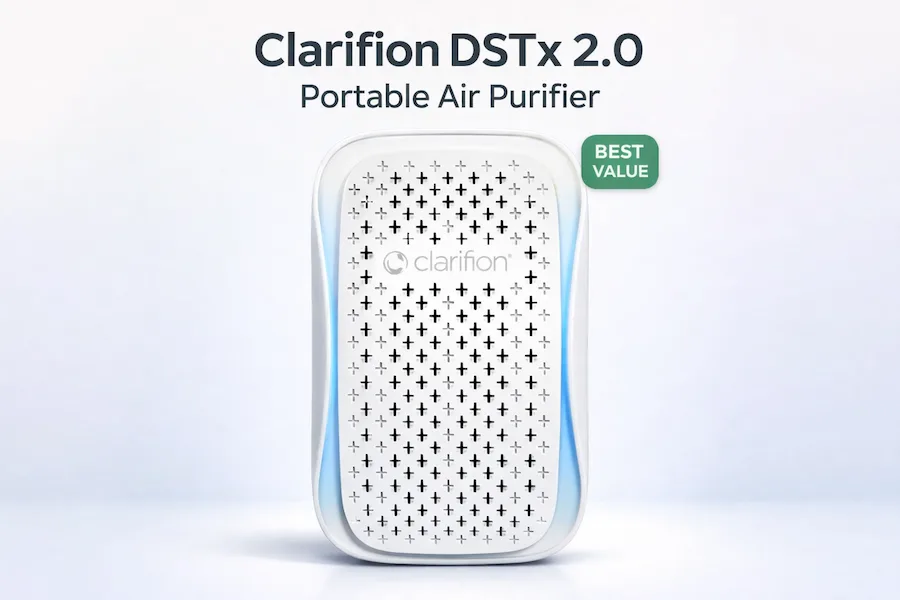
What You Get: Three units + three HEPA filters already installed
💡 Smart Buying Tip: The 3-pack offers the best value at about $27 per unit. Buy one unit for $40-45 and you’re overpaying.
- ✅ CARB Certified (safe ozone levels)
- ✅ Dual-speed fan control
- ✅ Plug-and-play, no setup needed
- ✅ 30-day satisfaction guarantee
Best For: Small bathrooms, closets, next to litter boxes, laundry rooms
Not Ideal For: Bedrooms over 120 sq ft, living rooms, or serious allergy relief
Alternative Recommendations for Better Performance
If you’re thinking about the Clarifion for a bedroom or larger space, I strongly suggest considering these proven alternatives instead:
BETTER CHOICE
Levoit Core 300S Smart True HEPA Air Purifier
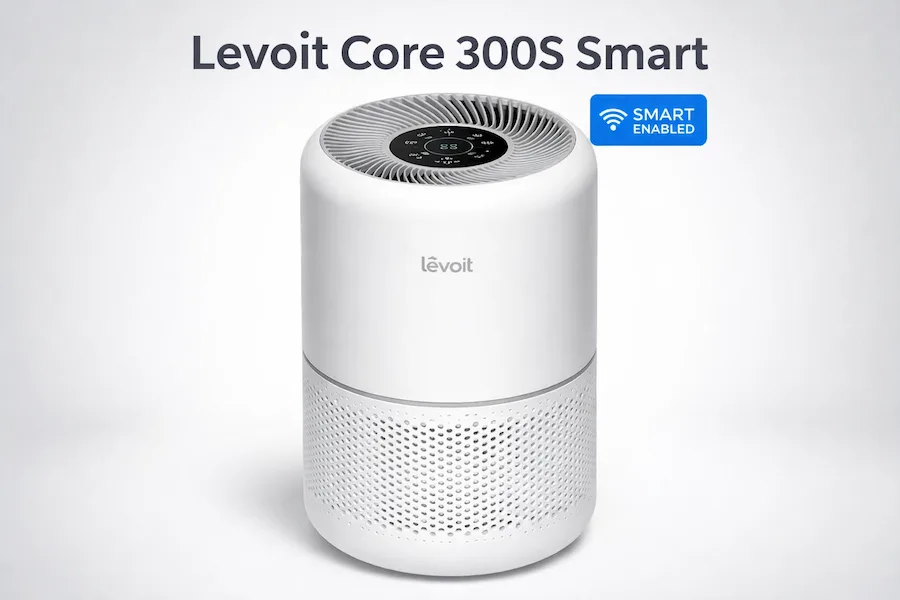
Coverage: 215 sq ft (actual effective coverage)
- True HEPA filtration (99.97% of 0.3-micron particles)
- Smart app control and air quality monitoring
- Multiple filter options for different needs
- Quiet operation: 24-50 dB
- Filter lasts 6-8 months
Why This Is Better: For just $20-30 more than buying three Clarifion units, you get a single air purifier that actually covers a full bedroom and provides measurable air quality improvement.
BEST VALUE
Coway AP-1512HH Mighty Air Purifier
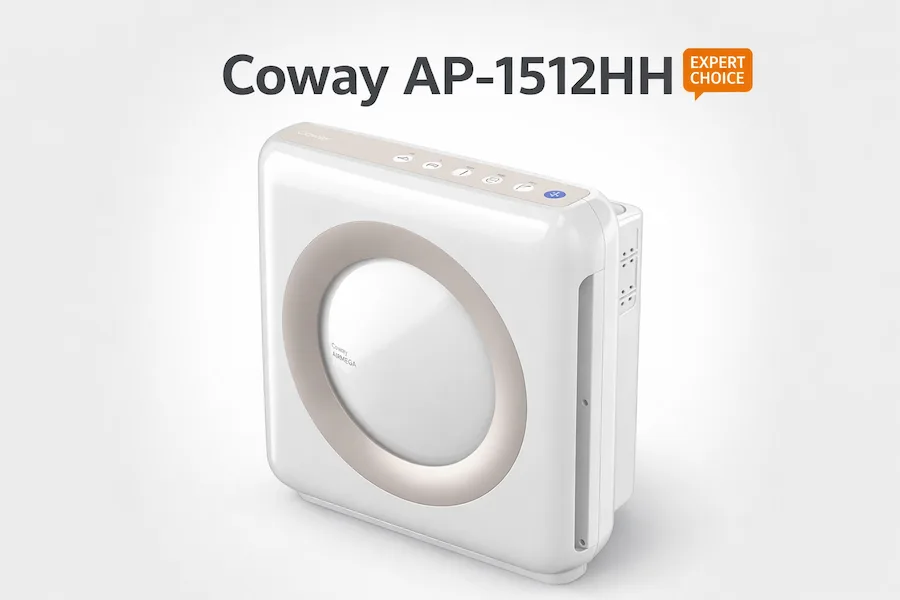
Coverage: 361 sq ft with 4 air changes per hour
- 4-stage filtration system
- 20,000+ five-star reviews on Amazon
- Recommended by allergists
- Eco mode saves energy automatically
- Filter indicator reminds you when to replace
Why Experts Love It: This is the air purifier that allergists and respiratory therapists actually recommend to their patients. It’s been a top seller for years because it simply works.
Frequently Asked Questions About Clarifion DSTx 2.0
How often do I need to replace the filter?
Clarifion recommends replacing the filter every 3 months with normal use. If you’re using it in a particularly dusty environment or running it on high speed constantly, you might need to replace it more frequently. Check the filter monthly by removing the cover. If it looks dark gray or black, it’s time for a new one even if it hasn’t been 3 months.
Can I use this in my baby’s nursery?
I’d be cautious here. While the device is CARB certified for ozone emissions, the ionizer component might not be ideal for a nursery. Babies have developing respiratory systems that are more sensitive to air quality issues. If you want air purification in a nursery, I’d recommend a traditional HEPA-only air purifier instead. Better safe than sorry when it comes to your baby’s lungs.
Does it really work for cigarette smoke?
Yes and no. The activated carbon layer in the HEPA filter can absorb some smoke odor in a very small space. However, if someone is actively smoking in a room, this device won’t keep up. Think of it more as something that helps reduce lingering smoke smell in a bathroom after someone smoked in there hours ago, not something that handles active smoking. For serious smoke removal, you need a proper air purifier with substantial activated carbon.
Why is mine making a grinding noise?
This is a common complaint after 6-12 months of use. The grinding noise usually means the small fan motor is starting to fail. Unfortunately, there’s no way to repair it, and Clarifion doesn’t offer warranty coverage beyond the initial 30 days. Your options are to replace the unit or see if you can get Amazon to help if you purchased through them and it’s within their return window.
Can I leave it plugged in 24/7?
Yes, the device is designed for continuous operation. The power usage is so low that running it constantly won’t significantly impact your electric bill. However, given the reports of units getting hot or failing, I’d recommend occasionally checking that it’s not warm to the touch. If it ever feels hot, unplug it immediately.
How do I know if it’s working?
The blue LED light indicates the unit has power and is running. Beyond that, there’s no way to measure effectiveness without an air quality monitor. Most people judge effectiveness by whether they notice a difference in odor or subjective air quality. After a few weeks, you can remove the filter cover and check if the filter looks dirty, which indicates it’s trapping particles.
Can I use third-party replacement filters?
Several companies make compatible filters that are cheaper than official Clarifion filters. User experiences are mixed. Some people say they work fine, others report they don’t fit as securely or don’t last as long. If you go this route, buy a small quantity first to test before stocking up. The official filters aren’t expensive enough to make third-party filters a huge money saver anyway.
Will this help with dust on my furniture?
Not really. Here’s why: the ionizer makes particles fall to surfaces, including your furniture. So while it might reduce airborne dust, you’ll still need to dust your furniture regularly. In fact, some users report noticing MORE dust on surfaces near the unit because the ionizer is actively making particles settle there. The small HEPA filter catches some dust, but it’s not enough airflow to significantly reduce furniture dust in a typical room.
Final Verdict: Is the Clarifion DSTx 2.0 Worth Buying?
After three weeks of testing, reading hundreds of reviews, and comparing it to traditional air purifiers, my verdict is nuanced.
The Clarifion DSTx 2.0 works, but only in very specific situations. If you need something for a small bathroom, powder room, closet, or next to a litter box, this device genuinely helps with odor control. The plug-in design is convenient, the power usage is minimal, and the price is reasonable for what it does.
However, it’s not a replacement for a real air purifier. If you’re dealing with allergies, asthma, or need to clean air in a bedroom or living room, spend the extra money on a proper HEPA air purifier with adequate coverage. The Clarifion can’t compete with traditional air purifiers for actual air cleaning in normal living spaces.
Think of the DSTx 2.0 as a targeted odor-control device for very small spaces, not as a comprehensive air quality solution. Set your expectations accordingly, and you’ll probably be satisfied. Expect it to solve serious air quality problems, and you’ll be disappointed.
My Rating: 4 out of 5 Stars
Pros:
- Genuinely effective for odor control in small spaces (under 100 sq ft)
- Plug-in design saves floor space and is incredibly convenient
- Low power usage (practically negligible electricity cost)
- Easy filter replacement takes 30 seconds
- Affordable entry price for small space solutions
- CARB certified for safe ozone levels
Cons:
- Very limited effective coverage area (150 sq ft maximum, realistic is closer to 100 sq ft)
- Louder than advertised on high setting
- Short lifespan issues reported by many users (6-12 months)
- No warranty beyond 30 days
- Minimal measurable air quality improvement on PM2.5 monitors
- Not suitable for people with respiratory sensitivities
The bottom line: This is a decent solution for very specific small-space applications. For everything else, invest in a proper air purifier.
Related Articles You Might Find Helpful
If you’re researching air purifiers and indoor air quality, these guides will give you more comprehensive information:
- Best HEPA Filters 2026: Medical-Grade (H13) vs True HEPA Guide – Understand the different types of HEPA filtration and which grade you actually need
- The 10 Best Kitchen Air Purifiers for Cooking Odors – If cooking smells are your main concern, these specialized units handle odors better than plug-in devices
- iWave Air Purifier Review: Why HVAC Pros Recommend This $500 Device – Learn about whole-home air purification systems that integrate with your HVAC
- Air Scrubber vs Air Purifier: Which One Actually Works Better? – Understand the difference between industrial air scrubbers and residential air purifiers
- Alen Air Purifier Honest Review: Is This $300+ Device Worth It? – Compare premium air purifiers to budget options
Disclaimer: This article contains affiliate links. If you purchase through these links, we may earn a commission at no additional cost to you. This helps us continue providing detailed, honest reviews to help you make informed decisions about your home. We only recommend products available on Amazon to ensure easy purchasing and reliable customer service.
Some images featured on this site are AI-generated for illustrative purposes. Actual product designs, specifications, and colors may differ from what is shown. All product names, logos, and brands are the property of their respective owners. Our reviews are based on independent research and may include affiliate links — if you purchase through these links, we may earn a commission at no extra cost to you.




Recent Comments