We were having a quiet evening at home when our neighbor came over. She was very upset. She had just come back from vacation and her house was broken into.
This scary event made us think about home security. We learned that keeping our homes safe is more than just locks and alarms today.
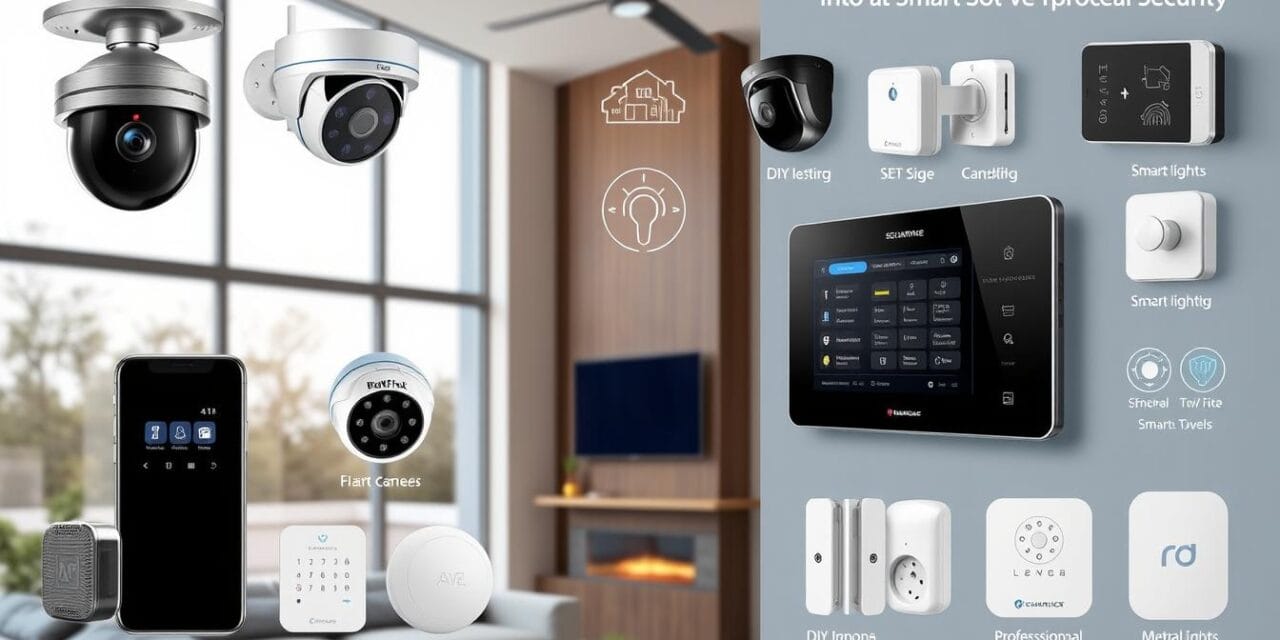
We started looking into smart home security. We found many options, from DIY systems to professional ones. These systems include smart locks, motion sensors, and advanced cameras.
We looked at both DIY and professional systems. We compared their features and tried them out. Now, we’re ready to share what we learned with you.
Key Takeaways
- Smart home security systems offer advanced protection in the digital age
- DIY and professional options cater to different needs and budgets
- Home automation integrates seamlessly with security features
- Wireless security provides flexibility and easy installation
- Motion sensors and smart locks enhance overall home protection
- Security cameras offer real-time monitoring and deterrence
- Choosing the right system depends on individual preferences and home layout
Introduction to Smart Home Security
Smart home tech has changed how we live and keep our homes safe. Our homes are now connected, giving us more convenience and security.
The Rise of Smart Home Technology
Recently, more people have started using smart home tech. We now have voice-controlled helpers and smart thermostats. These devices have made our homes smarter and safer.
Importance of Home Security in the Digital Age
With our homes getting more connected, we need strong security more than ever. Security automation lets us watch and control our homes from afar. This gives us peace of mind and keeps intruders away.
Overview of DIY and Professional Security Options
We have two main choices for smart home security: DIY and professional. DIY systems are easy to set up and save money. Professional systems offer expert help and constant monitoring.
- DIY systems: User-installed, customizable, often more affordable
- Professional systems: Expert installation, 24/7 monitoring, complete coverage
Next, we’ll look at the good and bad of each option. This will help you choose the best for your home.
Understanding DIY Smart Home Security Systems
DIY smart home security systems are easy to use and affordable. They let homeowners set up their own security without needing a pro.
Benefits of DIY Installation
Setting it up yourself is a big plus. It saves money and lets you do it at your own speed. Most people find it easy, thanks to guides from the makers.
Popular DIY Smart Home Security Brands
Some brands stand out in the DIY market:
- Ring: Famous for its video doorbells and customizable security
- SimpliSafe: Has easy-to-install wireless systems and monitoring options
- Nest Secure: Offers smart home security that works with Google Assistant
Key Features of DIY Systems
DIY systems have many features to keep your home safe:
| Feature | Description |
|---|---|
| Customizable Security | Users can add or remove parts as they like |
| Mobile App Control | Control your system and get alerts on your phone |
| Smart Home Integration | Works with other devices for better control |
| No Long-Term Contracts | You can change or cancel service anytime |
These features make DIY systems flexible and easy to use. They let you tailor your security and connect with other smart devices. This makes them great for tech-savvy homeowners.
Professional Smart Home Security Solutions
Professional smart home security solutions keep your home safe. Companies like ADT, Vivint, and Frontpoint are leaders. They offer advanced systems and expert installation.
ADT is known for trusted security. They have customized packages for you. Their techs make sure everything works right, so you can relax.
Vivint is known for its cool tech and design. Their systems do more than just keep you safe. They also manage your energy and automate your home. Their experts make sure everything works great.
Frontpoint mixes top-notch gear with easy setup. You can get help or do it yourself. This way, you save money and get the job done.
| Provider | Installation | Monitoring | Smart Home Integration |
|---|---|---|---|
| ADT | Professional | 24/7 Professional | Extensive |
| Vivint | Professional | 24/7 Professional | Advanced |
| Frontpoint | DIY or Professional | 24/7 Professional | Moderate |
Professional smart home security gives you peace of mind. You get expert setup, 24/7 monitoring, and works with your smart devices. These systems keep your home safe all the time.
Smart Home Security Comparison: DIY vs. Professional
Choosing between DIY and professional smart home security systems can be tough. We’ll look at the main differences to help you pick what’s best for you.
Cost Analysis
Prices for security systems differ a lot between DIY and professional options. DIY systems cost less upfront but might need more money for equipment. Professional systems have higher upfront costs and monthly fees.
| Aspect | DIY | Professional |
|---|---|---|
| Upfront Cost | $200 – $500 | $300 – $1000 |
| Monthly Fees | $10 – $30 | $30 – $60 |
| Contract Terms | Flexible, often month-to-month | 1-3 year commitments common |
Installation Process
DIY systems are easy to install yourself. Professional systems need expert help. The installation can affect your experience and how well the system works.
Monitoring Options
Both DIY and professional systems let you monitor yourself or get professional help. Professional systems usually offer better monitoring and quicker help.
Customer Support and Maintenance
Good technical support is key for both systems. Professional providers give 24/7 support and regular checks. DIY systems might have less support.
Your choice depends on your budget, how tech-savvy you are, and how much support you want. Think about these things when picking a smart home security solution.
Key Components of Smart Home Security Systems
Smart home security systems have changed how we keep our homes safe. Let’s look at the main parts that work together for a strong security setup.
The control panel is at the center of every system. It controls all devices and lets homeowners arm, disarm, and watch their security. Many panels have touchscreens and work with smartphones for easy use.
Security cameras are key for watching over your home. They take clear pictures, even at night. Some cameras can even recognize faces and let you talk to people remotely.
Smart doorbells are getting more popular. They mix video cameras with the usual doorbell, so you can see and talk to visitors from anywhere.
Window sensors and glass break detectors are the first defense against intruders. They alert you if a window is opened or broken, giving you a warning of possible break-ins.
- Motion sensors detect movement in certain areas
- Environmental sensors watch for smoke, carbon monoxide, and water leaks
- Smart locks offer keyless entry and remote access control
By using these parts together, homeowners can make a security system that fits their needs and likes.
Integration with Other Smart Home Devices
Smart home security systems are getting better at working with other devices. This makes our homes more efficient and easy to use. Let’s see how these systems work with other smart home tech.
Compatibility with Voice Assistants
Voice assistants are key in smart homes. Amazon Alexa and Google Assistant let us control our security with voice. We can set alarms, check cameras, or lock doors just by talking.
Apple HomeKit is also popular. It uses Siri to control security devices for us.
Syncing with Smart Locks and Doorbells
Smart locks and doorbells boost home security. They work together with your main system for better defense. You can let visitors in or see who’s at the door from anywhere.
These devices use Z-Wave or Zigbee to talk to each other. This keeps your home connected.
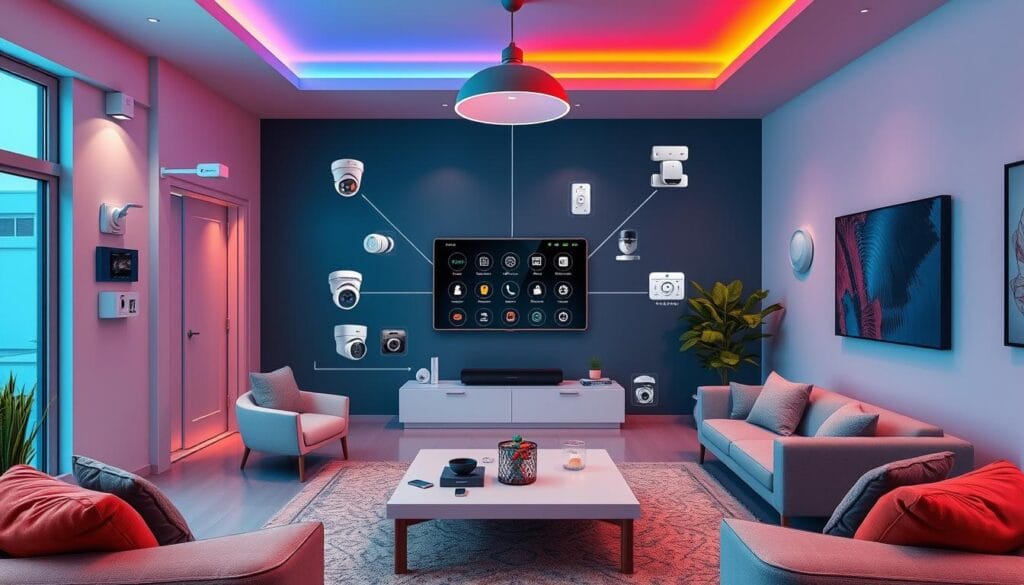
Connecting to Smart Lighting and Cameras
Lighting is important for home security. Smart bulbs can turn on and off when you’re away. This scares off intruders.
Security cameras work well with these lights. When someone moves, lights turn on. This lets cameras get better pictures.
By linking these smart devices, we make a strong security network. This network keeps our homes safe and makes life easier and greener.
Privacy and Data Security Concerns
Smart home security is convenient but raises privacy worries. We need to protect our personal info. Data encryption is key to keeping our digital lives safe.
Many smart home devices gather our personal data. This includes our daily habits, voice commands, and video footage. Companies use strong encryption to protect this data. They make it unreadable to anyone who shouldn’t see it.
Two-factor authentication adds extra security. It asks for two ways to prove who you are. This could be a password and a fingerprint, or a code sent to your phone.
“Security is not just about locks and alarms anymore. It’s about protecting our digital footprint in our own homes.”
Cloud storage is important for smart home security. It lets us access our data from anywhere. But, our data is stored on remote servers. Many companies use end-to-end encryption for cloud-stored data to keep it safe.
GDPR compliance is vital for companies in Europe. These rules make sure businesses handle personal data well. They give users more control over their info and how it’s used.
| Security Feature | Purpose | User Benefit |
|---|---|---|
| Data Encryption | Protect data from unauthorized access | Peace of mind for sensitive information |
| Two-Factor Authentication | Verify user identity | Reduced risk of account breaches |
| Cloud Storage | Remote data access and backup | Convenience and data recovery options |
| GDPR Compliance | Ensure responsible data handling | Greater control over personal information |
Knowing about these security features helps us make smart choices for our homes. It’s important to pick devices and systems that focus on our privacy and data safety.
Future Trends in Smart Home Security
Smart home security is changing fast. We’re seeing new things that make our homes safer and smarter. Let’s look at some big trends in home protection.
AI and Machine Learning Advancements
Artificial intelligence is changing home security. It uses predictive analytics to learn and spot odd things. This lets your system know about threats before they arrive.
Edge computing makes data processing faster on your devices. This helps your system react quicker.
5G Integration in Security Systems
The 5G network is changing smart home security. It offers fast speeds and low delay. This means your security system can send alerts faster and connect better.
Biometric Authentication Developments
Facial recognition is getting better for homes. Advanced systems can tell family from strangers. This adds a personal touch to your home’s security.
| Trend | Impact on Home Security |
|---|---|
| AI and Predictive Analytics | Proactive threat detection |
| Edge Computing | Faster local data processing |
| 5G Integration | Improved device connectivity |
| Facial Recognition | Enhanced access control |
Quantum encryption is coming. It promises to keep your data safe forever. This tech is new but could change how we protect our digital lives.
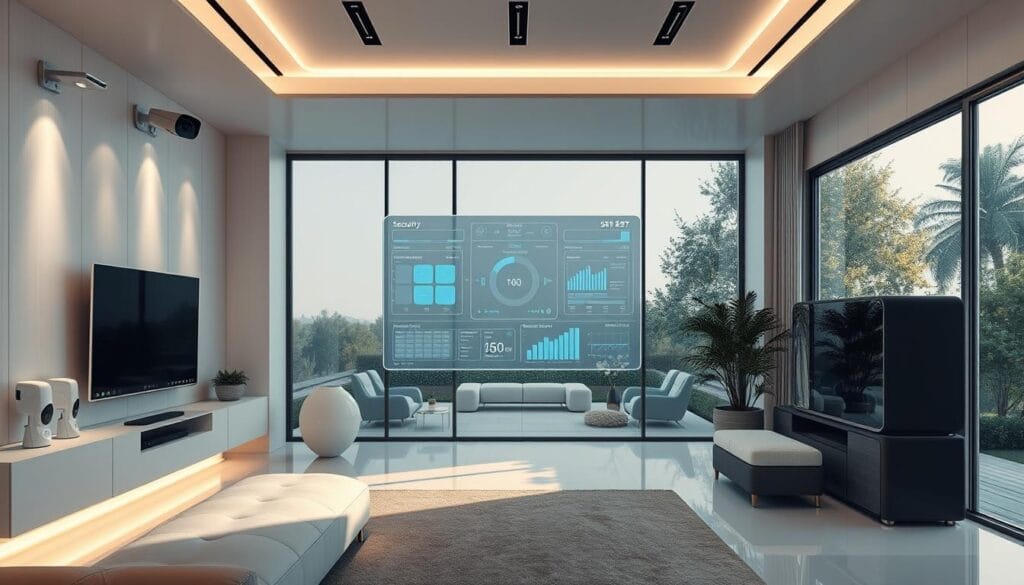
As these techs get better, our homes will get smarter and safer. The future of smart home security looks bright. We’ll have more peace of mind and control over our homes.
Conclusion
Smart home security is very important today. We looked at DIY and professional options. The best choice depends on what you need and can afford.
Think about your lifestyle and how tech-savvy you are. DIY setups save money and are flexible. Professional systems offer expert help and support. Both can make your home very safe.
What’s most important is finding a system that fits you. Consider your home’s layout and your family’s habits. Choose wisely to feel safe and secure at home.
This guide aims to help you understand smart home security. By carefully considering your options, you’ll find the best way to protect your home and family in today’s digital world.
FAQ
What are the main benefits of a DIY smart home security system?
DIY systems are cheaper upfront and easy to set up yourself. They let you add or change parts as you want. With brands like Ring and SimpliSafe, you can make your security fit your home and budget.
How do professional smart home security solutions differ from DIY systems?
Professional systems, like ADT and Vivint, have expert installers and 24/7 monitoring. They cost more but offer more security and support. This gives you peace of mind and extra protection.
What are the key components of a smart home security system?
Key parts are cameras, smart doorbells, sensors, and a control panel. These work together to watch your home and alert you to dangers.
Can smart home security systems integrate with other connected devices?
Yes! Many systems work well with Amazon Alexa and Google Assistant. They also connect with smart locks, lights, and cameras. This makes your home smart and secure.
What steps can we take to ensure our privacy and data security with smart home systems?
To keep your data safe, choose systems with strong encryption and two-factor login. Use strong passwords and update software often. This protects your personal info.
What are some emerging trends in smart home security technology?
New trends include AI for threat detection and 5G for better connections. There’s also facial recognition and more secure encryption. These will make your home safer and more private.







Recent Comments